2026 GMC Sierra EV Reviews, Pricing & Specs
Write a review--
Original MSRP
7.5
of 10
expert review
avg user rating
(0 reviews)
Pros
Incredible acceleration, handling, and braking
Conventional look and feel
Uniquely practical with features like a midgate and four-wheel steering
Cons
Excessive weight
High charging costs due to an enormous battery
Less luxurious than the gas and diesel Sierra models
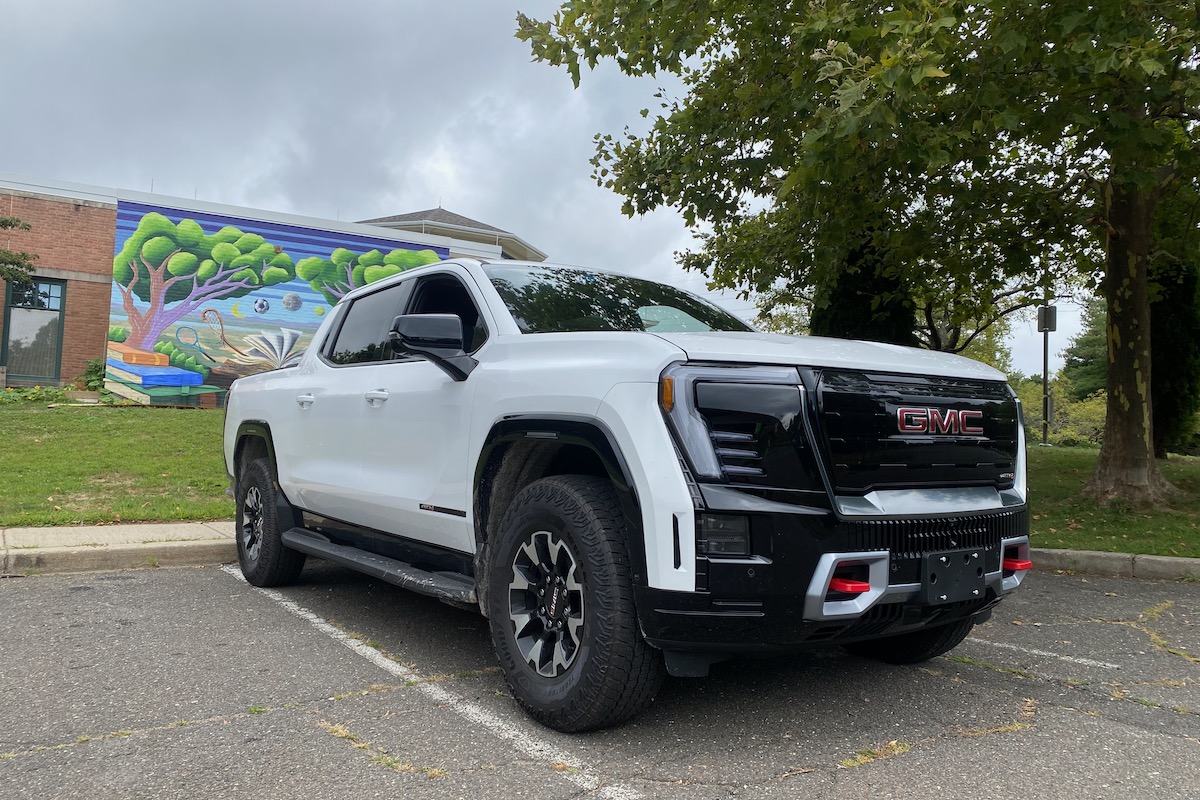
GMC's do-it-all electric pickup truck adds more battery and trim-level options for 2026.
What vehicle can run against a Corvette on a Friday night, tow more than 5,500 kilograms (12,000 pounds) on the weekend, and park like a small car in the office lot on Monday—all without a whiff of oil or gas? The GMC Sierra EV is that all-in-one vehicle, and it’s one of only five electric full-size pickup trucks on sale. For 2026, GMC adds two lower-range batteries and two lower trims to complement what is now the industry’s longest-range EV.
Verdict: The 2026 GMC Sierra EV is the exotic choice within an already exorbitant pickup truck culture.
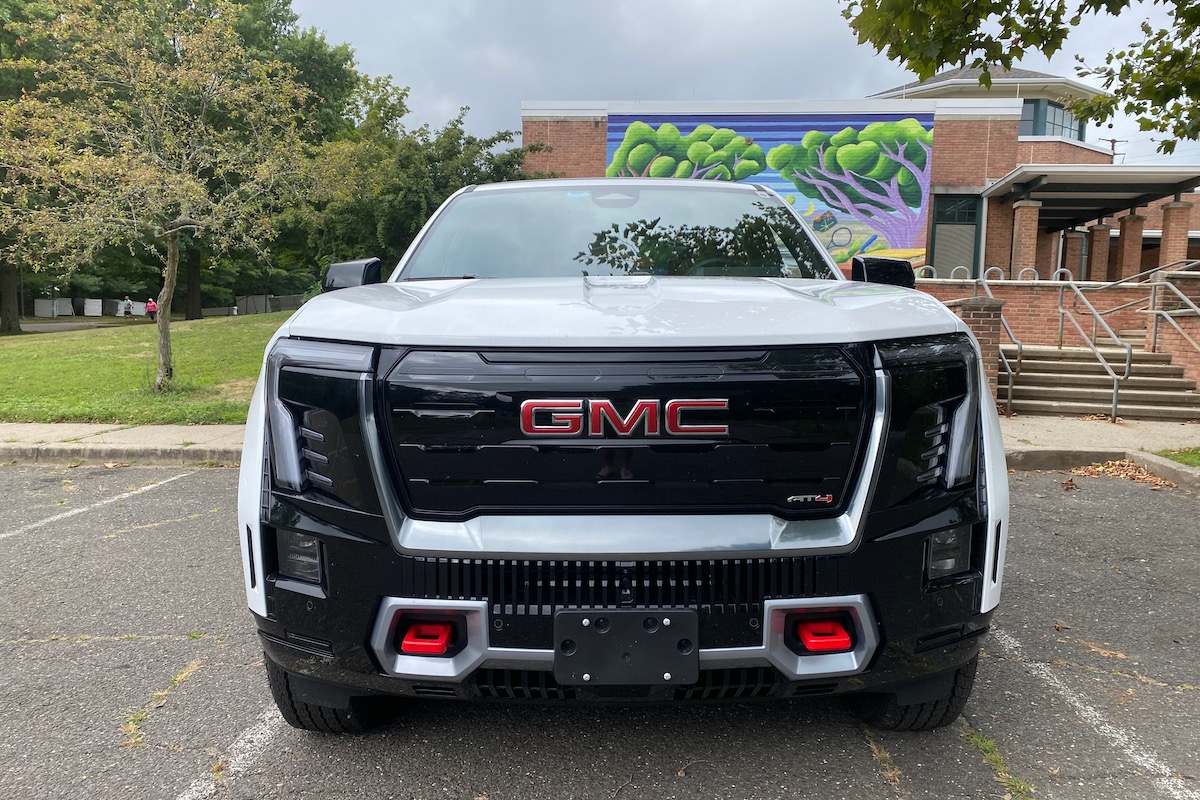
The most conservative design among EV pickups is the Ford F-150 Lightning, which looks the same as any F-150. Moderately more creative is the Rivian R1T, which looks unique yet still very normal. The GMC Sierra EV lives somewhere between those two. It is plainly obvious from the solid illuminated grille, bracketed turn signals, and the one-piece body—with no gap between the cab and the bed—that this is a different Sierra.
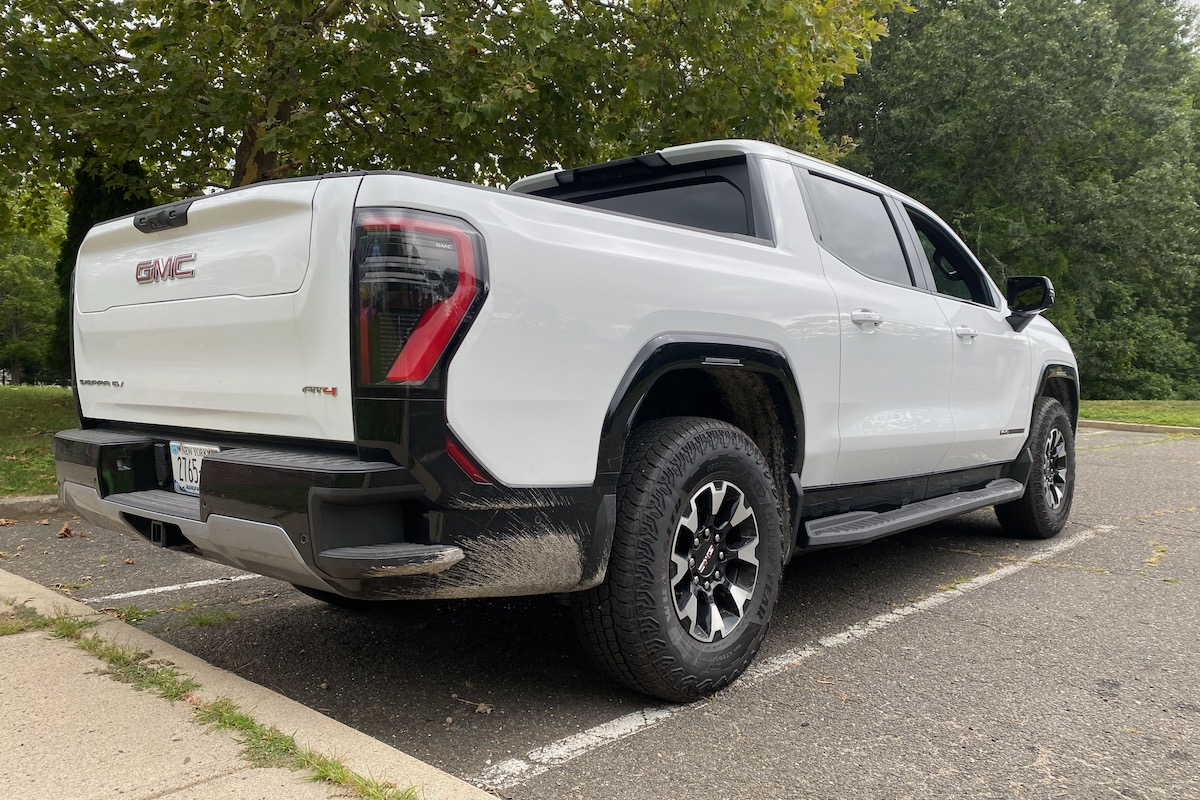
But the simple vertical taillights, conventional door handles, the MultiPro Tailgate, and the red GMC logo are comfort food to Sierra owners, as are the chunky 18-inch wheels on the GMC Sierra EV AT4 model. This off-road trim level also includes blackened front and rear bumpers, red tow hooks, and running boards that don’t impede ground clearance. Alternatively, the GMC Sierra EV Denali adds more brightwork and 24-inch wheels.
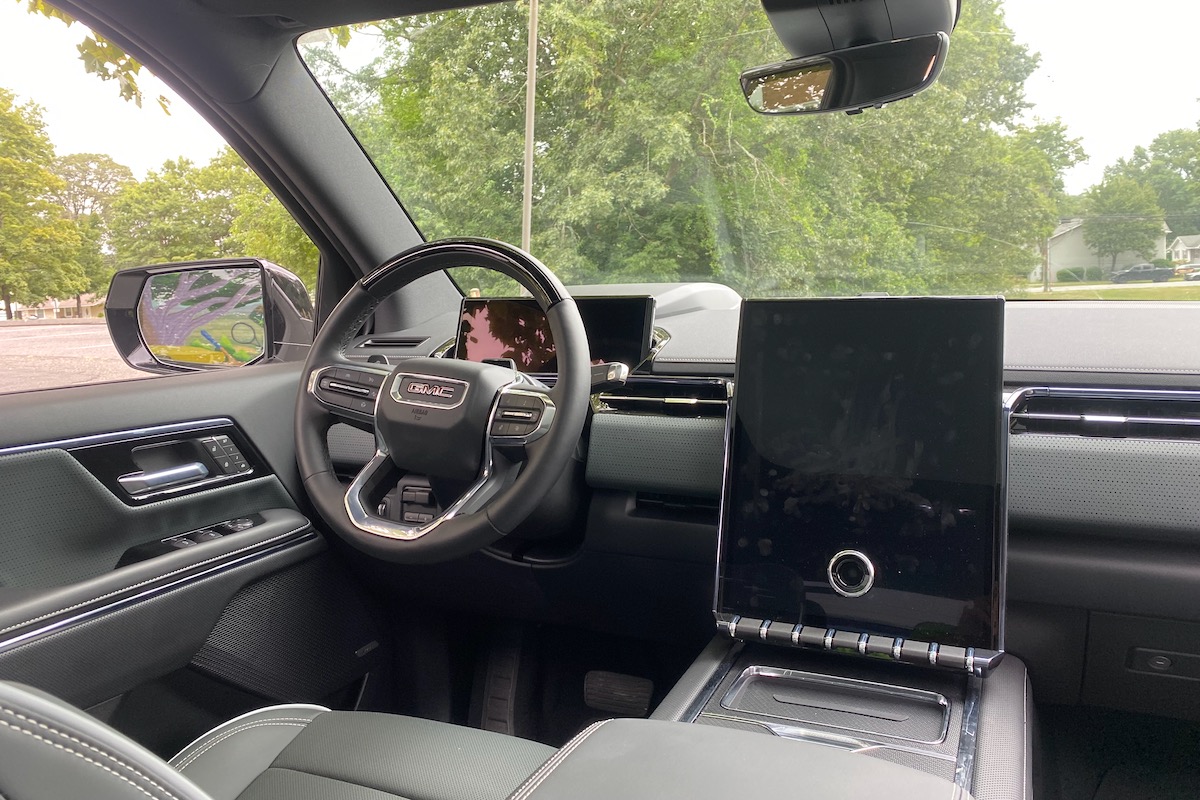
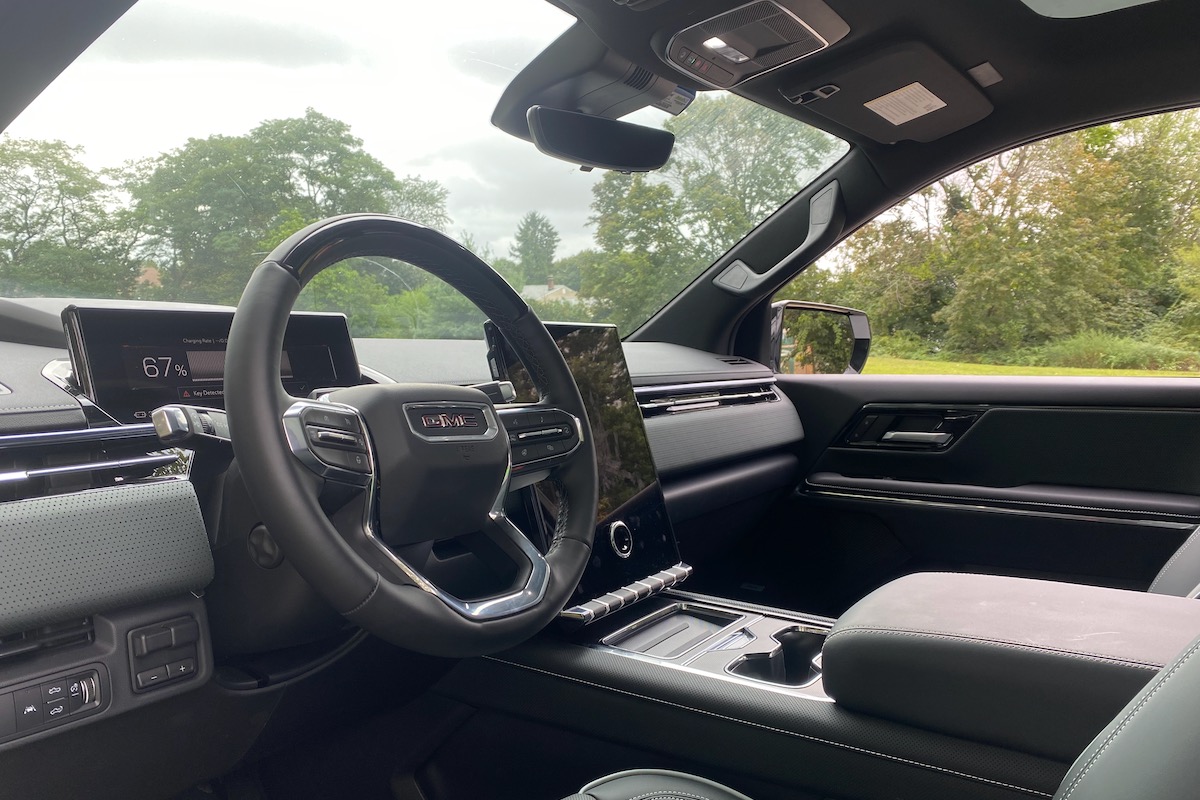
The body's softer edges and the upright, rounded fascia recall the streamlined locomotives General Motors built in the 1940s. It's handsome and masculine without flexing too hard. The interior is clean without being overly minimalist and screen-heavy like a Tesla Cybertruck or a Rivian. It's the same layout you'll find in any new GMC truck or SUV—a vertical screen, a single row of climate toggles, clearly marked buttons on the steering wheel, some plastic chrome, good fit and finish, real door handles, and decent vinyl.
Even in Denali trim, the cab is hardly as plush or crafted as a gasoline or diesel Sierra 1500 Denali. You're paying for what you can't see—the battery, the electronics, the otherworldly performance we'll get to in a moment—not an ornate interior. That's fine. There are enough padded and soft surfaces, the two sliding trays on the centre console move with heft, and the switches and stalks feel substantial. On long cruises, it's a delightful cabin. Yet a few splashes of colour and rich leather would be welcome.
During a normal vehicle's development, engineers maximize capability while avoiding excessive size, mass, and cost. Heavier, taller, and longer vehicles steer more clumsily, accelerate more slowly, roll more noticeably, and consume more fuel. GMC markets the Sierra EV as a light-duty truck, yet it weighs more than 4,000 kilograms (close to 9,000 pounds) empty. That’s more than a Sierra 3500 HD with dual rear wheels.
So, the Sierra EV rides on a heavy-duty suspension with eight equally heavy-duty lug nuts on each wheel and each tire filled to an again heavy-duty 60 psi. Yet, it can tow only up to 5,660 kilograms (12,500 pounds). That's great for a light-duty but a mere third of what a 3500 HD can pull. The payload is also skimpier than a midsize truck’s at a mere 680 kilograms (1,500 pounds) with the Max Range battery. In AT4 trim, with a five-centimetre lift, it stands more than two metres tall. Tow hook to trailer hitch, you're looking at nearly six metres of truck.
The Sierra EV's physical heft should equate to disastrous results but, on the contrary, the driving experience is practically faultless. Two electric motors deliver more mid-range torque than any diesel, and with anywhere from 605 to 760 horsepower, the Sierra EV slingshots into traffic like a supercharged Camaro. Traction and roadholding are akin to a midsize three-row SUV, not a mammoth truck.
Unlike the undersized rotors on most GM trucks, braking is exceptional. A panic stop, even on all-terrain tires, delivers smoothly and assuredly. Body lean, pitch, and dive are controlled and mitigated as though it were a sporty crossover, whether you choose the trail-tuned AT4 or the air-sprung Denali Reserve.
Maneuverability is equal to a midsize sedan’s. The rear wheels turn in the opposite direction at low speeds, which makes for easy U-turns and quick parking, even in the tightest lots. The ride is serene, and the suspension crashes on big bumps only if you're driving on the Denali Reserve's giant 24-inch wheels. Even then, there are no harsh, bone-shaking impacts like you'll feel in unladen heavy-duty trucks. This is an extreme vehicle that turns every dial to the max, and yet walking on that knife edge of high performance doesn't cause it to fall apart or upset its poise in any way.
We didn't test the AT4 off-road. Its 25.5-centimetre ground clearance is impressive, but its approach, breakover, and departure angles are worse than those of the internal-combustion Sierra 1500 AT4X. The Crab Walk diagonal-steering feature from the GMC Hummer EV is available, but all it does is induce motion sickness. The effect is like pushing a shopping cart on four loose wheels—you can't point it reliably in any direction and hope to get there. The four-wheel steering is where the fun is at, not Crab Walk.
What about the downsides of owning an EV? The Max Range battery is so large that, at 50 percent charge, the Sierra EV has roughly 300 kilometres of range left. Our testing in 27-degree weather allowed us to run 627 kilometres on a single charge (from 100 percent to 12 percent). Run all the way down, we would have seen 708 kilometres. That’s slightly short of GMC's 769-kilometre estimate, but without even attempting to conserve energy on a fast highway, with uphill climbs and the A/C blasting, our results were incredible. And this is not some slippery, low-slung sedan or coupe—it’s a brick in the wind—rounded at the edges, but a hard brick, nonetheless.
In cold weather, when we tested a 2024 Sierra EV Denali Edition 1, our range was only about 480 kilometres. But GMC has since made numerous tweaks to the powertrain and software, which have improved range significantly. Now that fast-charge stations are finally becoming reliable and more plentiful, the Sierra EV makes long distance cruising enjoyable. It's the best electric vehicle, period. We only needed a huge truck with a battery that's as heavy and expensive as a small car, but GMC got us here.
For 2026, there are three battery choices. In Canada, the Standard Range (455 kilometres) is standard only with the base Elevation trim. The Extended Range is standard on the AT4 and optional with the Elevation and the Denali (620 to 660 kilometres, depending on trim and configuration). The Max Range is optional either with the AT4 or the Denali (769 kilometres). DC fast-charging rates vary by battery. Only the Max Range can take up to 350 kW, while the Extended Range and Standard Range are 300 kW and 220 kW, respectively. Your electric rates may vary, especially at home, but 205 kWh is a huge amount of energy to replenish.
The GMC Sierra EV’s rear seats are palatial. Truly. The flat floor, rear doors that open to nearly 90 degrees, an available panoramic glass roof, and plenty of legroom make this the best crew cab extant. The front seats get standard heating and available massaging and cooling, but it's the back seats that are the place to be. Even though there's nothing more than available heated outboard cushions and a couple of USB ports, the sheer amount of space is unmatched in the segment.
The MultiPro Midgate is a marvel of engineering, just as it was in the early 2000s Chevrolet Avalanche. Taking a few minutes to fold down the rear seats, stow the rear glass, and fold down the partition is worth the effort: nearly three and a half metres of bed length allows the longest items to fit without extending past the open tailgate (which includes a flip-up barrier to prevent movement). For items that don't require the entire height of the cab, the Midgate allows for either one or both partitions to fold down without removing the glass.
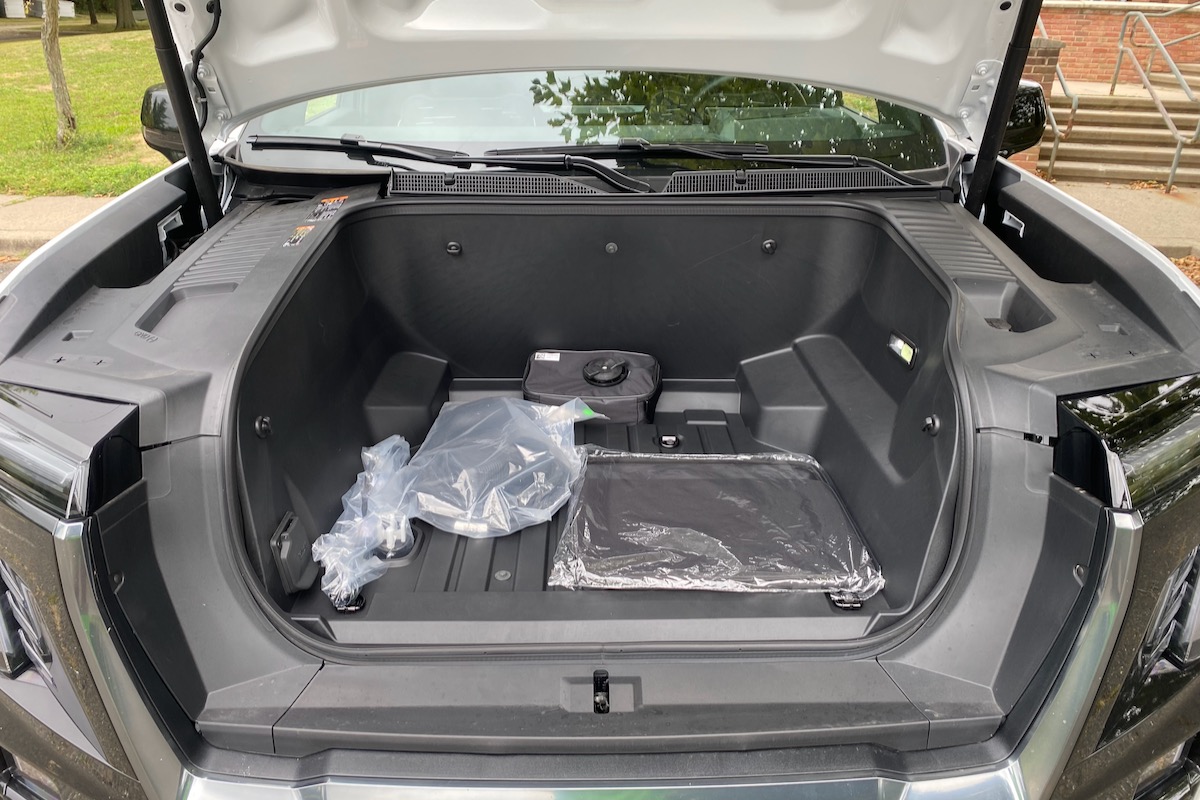
Power outlets in the bed can feed up to 10.2 kW to 120- or 240-volt devices, plus there’s a 120-volt outlet under the powered hood which opens for an extra 311 litres of storage. However, the tailgate does not open or close remotely, which it should at this price point.
The infotainment touchscreen responds quickly, and menus are very legible with large graphics and type across menus. However, GM’s decision to remove critical physical controls is a major misstep. Say you leave the headlights on and open the door. The truck shuts off and dings at you as a reminder, but the only control is in the touchscreen, which is now black. So, you have to hop back in, step on the brake to turn it on, tap the light icon on the screen, hit "auto" or "off," then tap another button (twice) to turn off the truck itself. The truck also started several times without requiring the brake pedal to be pressed—including once when the key fob was placed on the windshield outside it. Even the dome light and window lockouts are controlled by the screen.
Another issue is that GMC doesn't offer a built-in sunshade or electrically adjustable tinting for the glass roof. On hot days, the cabin bakes under the sun. GMC will sell you a cover you have to manually install and remove. The drive modes also require several screen taps to access, and when you want Max Power Mode, a cheesy sound effect mutes the stereo for several seconds—and you can’t turn it off in the settings. These are all glaring annoyances we'd like to see addressed in future model years.
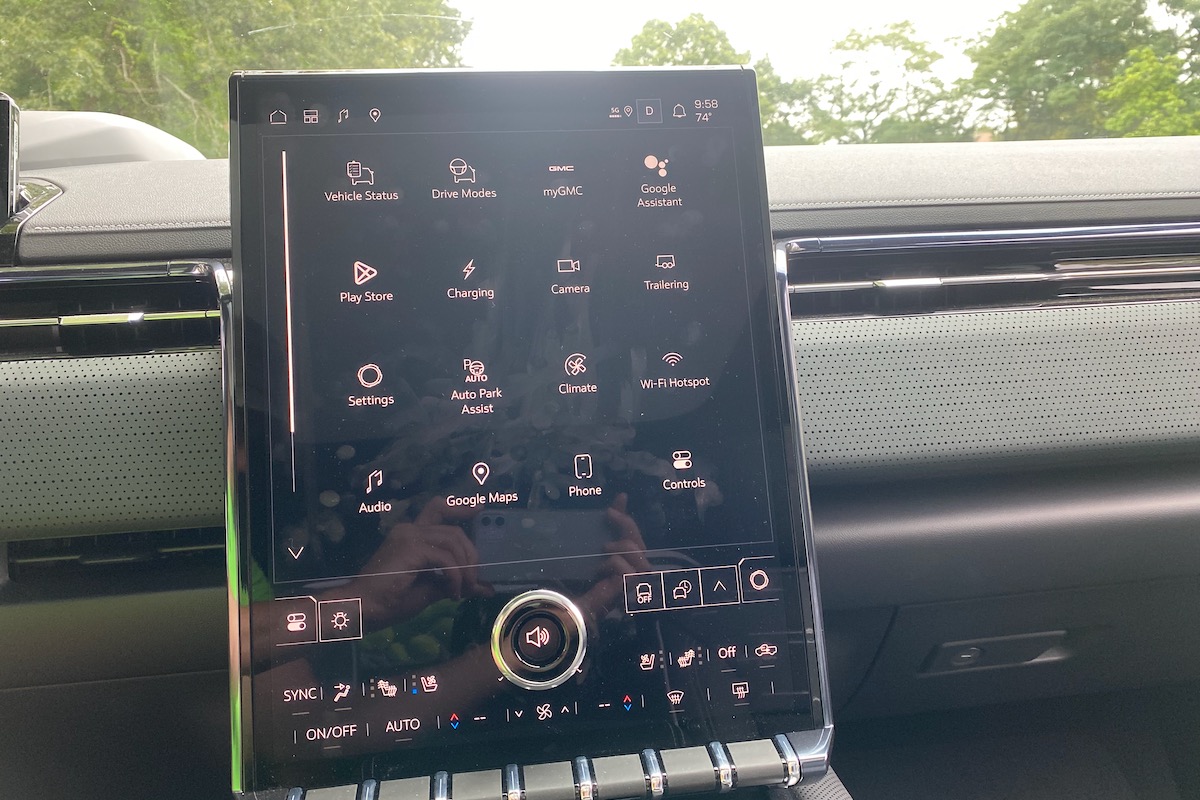
Aside from making ordinary tasks such as ignition and lighting a multi-step process, the touchscreen also doesn’t support phone projection beyond basic Bluetooth connectivity. Whether wired or wireless, GM's newer electric vehicles do not have Apple CarPlay or Android Auto, despite using a Google-based system with Maps, Assistant, and the Play App Store that, on GM’s internal-combustion models and the Cadillac Lyriq EV, supports these features.
Super Cruise, however, is excellent. This driver-assist system will steer, brake, and change lanes without any driver input. You don’t even have to keep your hands on the wheel. The system only requires that you keep your eyes on the road. The light bar on the top of the steering wheel makes it easy to know when the system is active, temporarily inactive, or disabled.
A trailering app is nothing more than a safety checklist and maintenance minder. It cannot automatically reverse and steer a trailer like the F-150 Lightning can. But the 14 camera views—including an option to install a camera on the back of a trailer—are sharp. The head-up display spans 14 inches and can show safety and navigation alerts above the 11-inch instrument panel, which offers several preset layouts (including full-screen maps) that are easy to read and use.
Because the Sierra EV is classified as a medium-duty vehicle under its gross vehicle weight rating (GVWR), neither GMC nor any government agencies publish crash-test results. Many of the safety regulations that apply to light-duty trucks do not apply at all to trucks in this category. You can do the math. In a collision, a 4,000-kilogram (9,000-pound) vehicle will obliterate a 1,600-kilogram (3,500-pound) car or a 2,000-kilogram (4,500-pound) family crossover. In this sense, the Sierra EV is a danger to other vehicles, not its occupants.
That said, the Sierra EV comes standard with 16 driver assistance features, including side bicyclist alert, front pedestrian and bicyclist emergency braking, and the Safety Alert Seat which sends warnings for the parking sensors, blind spot monitor, and collision systems as silent vibrations in the seat cushion. Even when parked, the Sierra EV’s seat will vibrate and notify the driver if someone or something is approaching the vehicle from either side.
The 2026 GMC Sierra EV starts at $83,633 for the Elevation, $105,133 for the AT4, and $117,633 for the Denali. Those trim levels, along with the multiple battery options newly available for 2026, make for six possible combinations.
Our AT4 Max Range, in no-cost Summit White with a hard tonneau cover, has a Canadian MSRP of $115,493, including the $2,800 destination charge and other fees. With similar options, it's a little less pricey than a Rivian R1T Dual or a Tesla Cybertruck All-Wheel Drive, but it’s more expensive than a Ford F-150 Lightning (which does not offer a similar off-road trim or equivalent package). The Chevrolet Silverado EV is even pricier with the same Max Range battery. But an equivalent gasoline or diesel Sierra 1500 AT4 is roughly $25,000 cheaper—and that's where the Sierra EV distances itself not only from the Sierra 1500, but every truck.
The Sierra EV is an overachiever. It has significantly more range than any electric competitor, truck or not, and it has chassis composure and stability under acceleration that other electric trucks cannot match. It's incredibly roomy, handles oddly well, tows plenty, offers gobs of interior space and a clever bed configuration, and weighs as much as three cars while driving as if it were one small car. There are a few software faults, but aside from that, this EV truck is difficult to objectively criticize when it performs so very well.


